Diagnostic
Instructions🔗
The diagnostic assessment is designed to determine the student's current word and sentence reading and writing level. Students with significant prior literacy instruction should take it to save time on repeating material they already know. Students with no or little prior literacy instruction can skip the diagnostic and start with the first lesson of the symbol courses. The diagnostic tool is only available in the full version of the program, as the Lite version only has a limited number of lessons that make the diagnostic unnecessary.
The instructions for conducting the assessment are as follows:
- The tutor starts the program, opens the "Practice" tab, and selects the folder where the student's progress is stored.
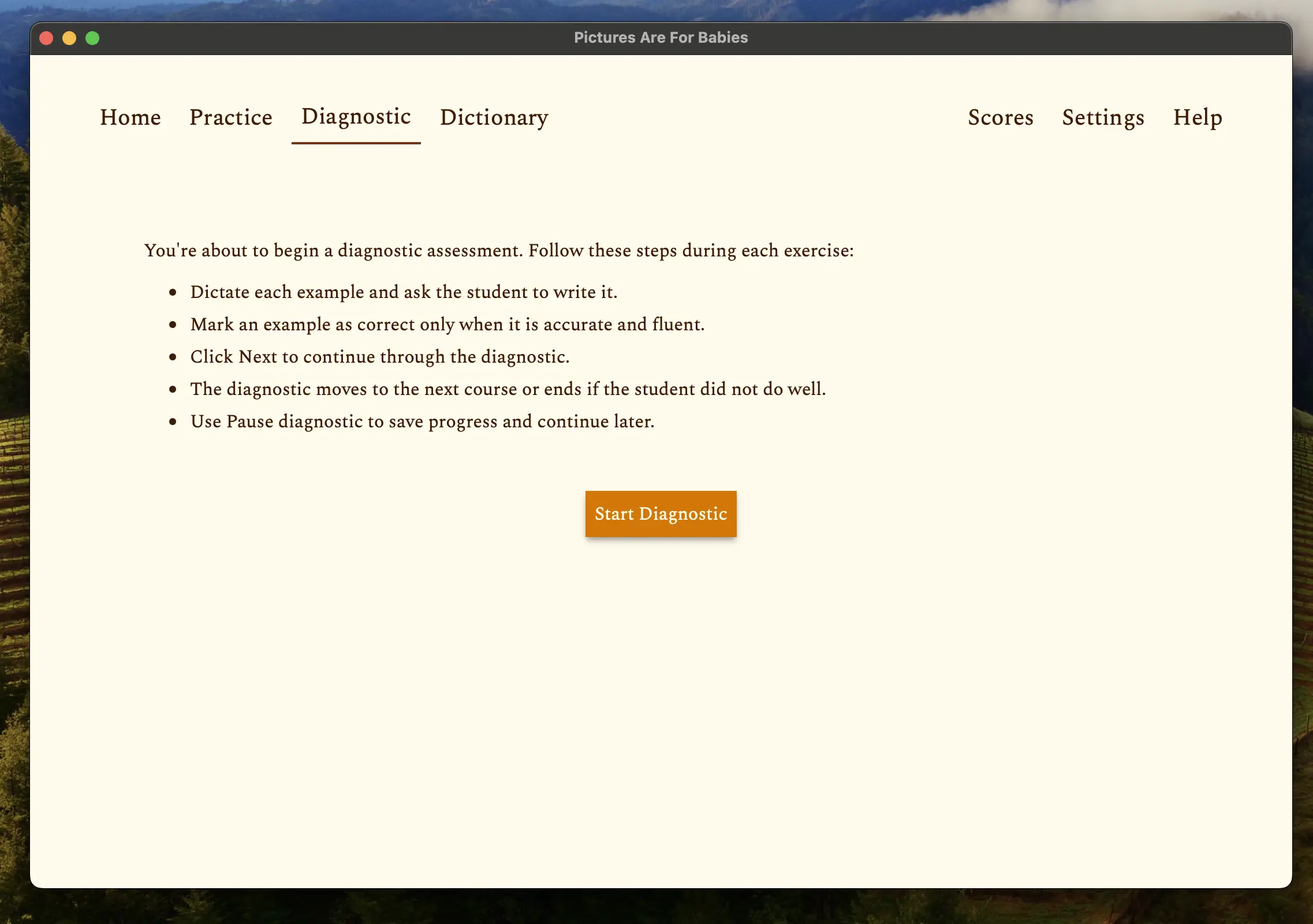
- The tutor navigates to the "Diagnostic" tab. If a previous diagnostic was completed, the results will be shown. Otherwise, the tutor clicks on the "Start Diagnostic" button to start the assessment.
- Each diagnostic lesson consists of example sentences from a specific level. The tutor dictates each example and asks the student to write it down on paper.
- The tutor marks an example as correct only when the student writes it down accurately and fluently by clicking on the "✓" button.
- After going through all the examples, the tutor clicks on the "Next" button to continue through the diagnostic. If the student did well, the diagnostic moves to the next level. The tutor repeats the process.
- If the student did not do well, the diagnostic ends and the levels the student cleared are automatically marked as mastered and will not be shown again.
- If the tutor disagrees or there was an error, they can remove those courses from the mastered list via the Settings.
- The tutor can also click on the "Pause Diagnostic" button to save progress and continue later. Going back to the "Diagnostic" tab will start the diagnostic where it was left off.
Some tips regarding the diagnostic:
- The diagnostic is not a handwriting test. The tutor can have the student spell the sentences or type them in a tablet if appropriate.
- The diagnostic is also not a memory test. The tutor can read the sentences as many times as needed for the student to write them down.
- The criteria for marking a sentence as correct is the same used throughout the entirety of Pictures Are For Babies: the student must write it down accurately and fluently. If the student struggles to write it down because of lack of fluency (and not logistical problems), the tutor should not mark it as correct, even if the student wrote it down correctly.
The diagnostic tab is shown below: